
Before, You Adapted to Software; Now It Adapts to You
For years, buying software meant adapting your operation to what the catalog offered. Today the equation has flipped: software can be molded to your business. This article explains what changed and how to know if your company can now demand it.
I know a company where the field the system calls 'observations' is actually the heart of the operation. Every order, every adjustment, every instruction the software hadn't anticipated ends up there, handwritten, because the system has no other place to store it. The team learned to live with that. They call it 'the field of truth' and they check it every day.
That field grew over the years, each time the operation needed something the system couldn't provide. By the time someone notices how much weight it carries, it already supports a part of the business that exists nowhere else.
From Renting a Tool to Renting the Work
Over the last decade, buying software stopped being buying. It became renting: a monthly fee for a tool that lives on someone else's cloud, the kind you use today for invoicing, your CRM, or payroll. The model has a name in the industry, software as a service, and it worked because it lowered the barrier to entry. Any company could use something tomorrow that previously required a large purchase and a months-long project.
That model brought with it the closed catalog. You rented what existed, compared three or four options, chose the least painful one, and your operation adjusted to what the tool expected. The language gave it away: people talked about 'implementing' a system, and implementing means adapting the company to what the system needs to function. That the company was the one that moved was taken for granted, because producing software tailored to a single operation was too expensive. The maker aimed at the average process, the one that served the largest number of customers.
Now another step is beginning to be named. Instead of renting the tool your team operates, you rent the work already done. It sounds like a natural evolution, and in part it is. But it opens a question that didn't need answering before, and it's the one that decides if this works for you: when your company's work becomes software, who does that software belong to?
When the Tool Follows Your Logic
Software adapting to your business doesn't mean changing a button's color or adding an extra field to a screen. It means the tool's logic follows your operation's logic: the processes that make you different, the particular way you serve your customers, the information that only your company produces.
I'll give examples from sectors I know. A distributor that invoices by delivery day instead of by order, because that's how they get paid. A hotel whose confirmation policy doesn't fit in the reservation system's standard calendar. A construction company that releases payments by work progress rather than by contract date. In all three cases, the operation had a clear logic and the software expected another, so someone on the team spends the day translating between the two.
When the software adapts, that translation disappears. The field is named what your team has always called it. The approval flow follows your actual steps, not the ones the system came with out of the box. The information that only your operation produces has its own place, with a name anyone in the company recognizes.
And this is not a cosmetic improvement. When the tool follows your logic, training someone new takes less time, manual data entry errors drop, and the operation stops depending on the few people who know how to survive the system.

The Accumulated Subscriptions Syndrome
There is a trap in this new scenario. Many companies don't carry one system that doesn't fit. They carry several that don't talk to each other.
One subscription for invoicing, another for inventory, another for CRM, another for payroll. Each reasonable on its own, each chosen for a real need. Together they form a puzzle that someone assembles by hand every day: export a report from one side, adjust it in Excel, upload it to the other. The operation ended up split among tools that were never designed to work together.
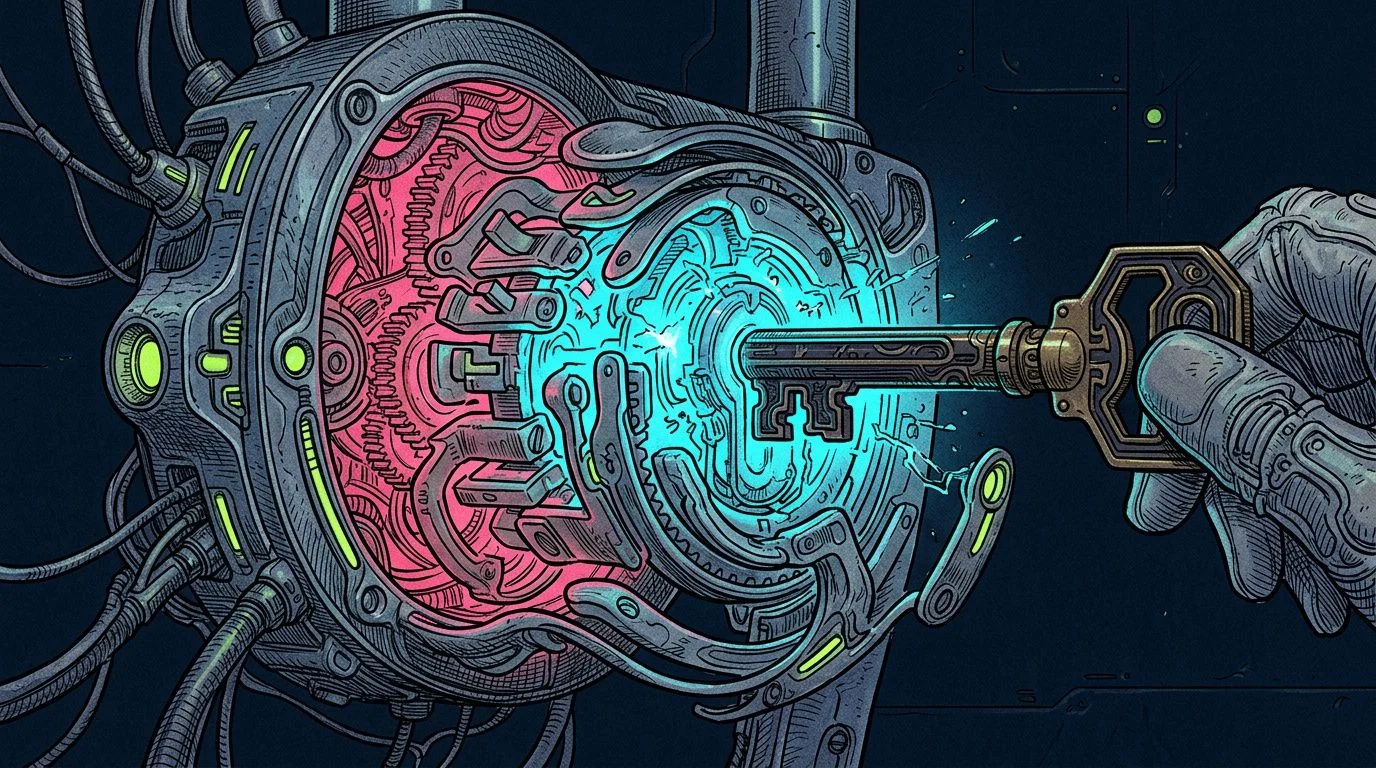
And the answer isn't always to build your own system from scratch. Sometimes the right solution is to connect those subscriptions so that information flows automatically from one to another. Five well-connected tools can solve the problem without you having to replace anything. The question worth asking is whether those bridges exist, how much they cost, and who maintains them when one breaks.
Building custom software enters the conversation when neither adding another subscription nor connecting the ones you have is enough. Not before.
Off-the-shelf software vs. connected subscriptions vs. custom-built
| Criterion | Off-the-shelf | Connected subscriptions | Custom-built |
|---|---|---|---|
| Fit to your operation | Requires adapting your processes | Adapts in pieces | Follows your logic from the start |
| Upfront cost | Low | Medium | High |
| Manual work | Medium to high | Depends on integrations | Low |
| Flexibility to change | Limited to what the system allows | Medium, requires reconfiguring bridges | High, adapts to the new process |
| Maintenance | Included in the fee | Depends on each vendor | Depends on who built it |
| Operational advantage | Standardized | Depends on the assembly | Sets you apart |
The Honest Limit
Just because it's possible doesn't mean it's always advisable. For processes that are the same in any company, adapting to a catalog tool is still the right thing to do. Accounting, email, standard payroll. There's nothing to gain by building from scratch there, and renting is cheaper and faster.
The shift matters where your operation is what sets you apart. If what makes you eligible for a client lives today in an 'observations' field and in the heads of three people, no catalog tool will account for it, because it was made for the average and you're not the average there.

Who Owns the Software
The question that remained open at the beginning comes back here. When your company's work becomes software, that software has an owner, and the difference shows in year three, not year one. Renting the work already done solves the short term. The system produces from day one, but it lives on someone else's infrastructure, and when the operation changes and you need the system to change with it, the one who decides is the one renting it to you, with their priorities, not yours.
A custom system moves at the pace of your business because it's yours. It accumulates your operation inside and therefore becomes more valuable each year, instead of costing the same each month for the right to keep using it. That's what I've been calling Digital Heritage: something the company builds once and keeps, rather than renting forever. A digital asset that grows and evolves with your business.
The word HERITAGE describes the same as a building or a fleet of vehicles: something the company owns, that appears on the side of what it has, not what it pays, and that next year is worth more than today.
A Criterion for Deciding
The next time a tool forces you to change how you work, ask yourself if that change improves your operation or only serves so you can fit into the system. For years the question didn't matter, because there was no other option. Today it has an answer that depends on you, and that field where your team stores what the system doesn't account for no longer has to be the only place where your company's truth lives.

Comments 0
Be the first to comment.