
Before you hire your next express website, read this
The invisible work that keeps your site alive after launch: security, speed, and competitive watch that no one sees but everyone feels.
I'm sure it's happened to you too. You're there, scrolling through social media, and that familiar ad pops up: "Professional web development in 3 days", "Your site ready in 48 hours", "Positioning experts starting at $4,999". The promise is tempting. A couple of clicks and you have an online presence, cheap, fast, almost magical (though I doubt the effectiveness of those campaigns). But magic, like promises, often evaporates within a few months.
We've already talked in previous articles about the difference between a digital brochure and a digital asset: the first looks nice on delivery day and loses value the next; the second is an asset that grows with your business. But there's one layer that's rarely mentioned: the invisible work after the launch. What happens while you sleep, while you serve clients, while the business runs. And that's what I want to talk about today.

Invisible security: what you don't see, but protects you
In a custom-developed platform, security is part of the foundations from day one. It's not an accessory added later, nor does it depend on third-party plugins that can become obsolete or have known vulnerabilities. Each plugin on a site built with prefabricated pieces is an additional entry point: it has its own failure history, its own update cycle, and is beyond your control.
Real data: every day, websites receive automated unauthorized access attempts looking for known weak points. And the most targeted points are precisely those of the world's most widely used platforms, because that's where the highest statistical probability of finding an open door lies. It's not conspiracy theory, it's math.
Furthermore, backups of your information shouldn't be "just another task someone might forget to set up." In custom development, backups are an automatic, invisible part of the basic maintenance. They happen without anyone having to remember. That's real peace of mind.
-
You get emails from your hosting provider about outdated plugins or critical vulnerabilities
Consequence Ignoring them can expose your site to automated attacks looking for known weak points, risking your customers' information.What to do Request a security audit of your current site to identify third-party dependencies that may be compromised. -
You notice your site loads slower than before, but you don't know why
Consequence Every second of delay reduces conversions and increases bounce rate; visitors don't come back and they don't know the problem is technical.What to do Test your site's speed with a free tool (like PageSpeed Insights) and compare it to direct competitors. -
You have no idea what your competition is doing on their website or social media
Consequence Marketing decisions are based on intuition, not real data, missing opportunities to adjust before the market changes.What to do Set up a basic weekly manual monitoring of 3 key competitors documenting visible changes. -
You never checked if your site's backups are running correctly
Consequence A server error or an attack could wipe out months of work with no recovery possible if backups aren't working.What to do Verify today that backups are active and that you can restore a test file from your provider's dashboard. -
Your site was launched more than a year ago and it's never had a deep technical review
Consequence Web technologies evolve quickly; an unmaintained site accumulates technical debt, making it slow, insecure, and less visible.What to do Schedule a quarterly technical review of your site with a specialist who evaluates performance, security, and positioning. -
Your marketing team asks for changes to the site but the process is slow or costly
Consequence The rigidity of the current system slows down business responsiveness, making you lose campaign or update opportunities.What to do Evaluate whether your platform allows quick modifications without depending on a developer every time a promotion changes.
Invisible performance: the speed no one sees, but everyone feels
Today's visitor expectation is immediacy. If your site takes more than two or three seconds to load, you've lost that user. It doesn't matter if your offer is excellent: judgment happens in the first seconds, and it's emotional, not rational.
Behind that speed is constant, silent work: optimization of how images, files, data are delivered. Adjustments you can't see. The visitor only perceives that everything works smoothly; they never know someone worked to make it that way. But if that work doesn't exist, they do notice—like they notice when water runs cloudy from the tap.
'Express' site vs. Custom platform
| Criterion | Fast/low-cost site | Custom platform |
|---|---|---|
| Security | Depends on plugins that can become obsolete | Integrated into the foundations, with automatic backups |
| Performance | Initial optimization, no ongoing maintenance | Constant adjustments for maximum speed |
| Competitive watch | Nonexistent or manual | Automated monitoring and periodic reports |
| Backups | Require manual setup or a plugin | Automatic, part of the infrastructure |
| Updates | Depend on the plugin manufacturer | Full control over every component |
| Long-term cost | Low upfront, high in corrective maintenance | Higher upfront, lower total cost of ownership |
Invisible competitive watch: something works while you sleep
While your business runs as usual, someone should be constantly watching what the competition is doing. Not to copy, but to adjust before losing ground, not after.
Imagine the peace of mind of knowing there is active, permanent surveillance of what's happening in your digital market: price changes, new offers, competitor moves. Without having to do it yourself, without relying on someone remembering to check. And marketing or advertising decisions are no longer made blindly: they are made with up-to-date data on what's really happening.
And there's more…
Soon I'll also talk about the invisible work of technical search engine optimization and results measurement. Because the difference between a digital brochure and a true asset is noticeable right there: in what continues after delivery.
Closing: how well cared for is the invisible layer of your site?
Hiring custom development isn't buying a finished site that gets delivered and forgotten. It's having someone who continues to care daily about what the visitor never sees but always perceives without knowing. Security, speed, competitive watch: the invisible work that keeps your digital asset alive.
Today I invite you to reflect on that. Not to buy anything, just to ask yourself: how well cared for is the invisible layer of your current site?
If you'd like to talk about it, a no-strings chat is always open.

Education: What Your Platform Can Do When It Truly Is Yours
In the first part of this series, I talked about the problem: scattered data, manual processes, disconnected tools. Now I'll show you what the solution looks like from the inside: a proprietary platform that unifies everything your institution does, without relying on third parties.

Your Digital Infrastructure Journey: From Idea to Integration
Four articles, four phases. One journey: from recognizing your website isn't enough to building infrastructure that generates value. Discover which stage you're in and how to move forward.
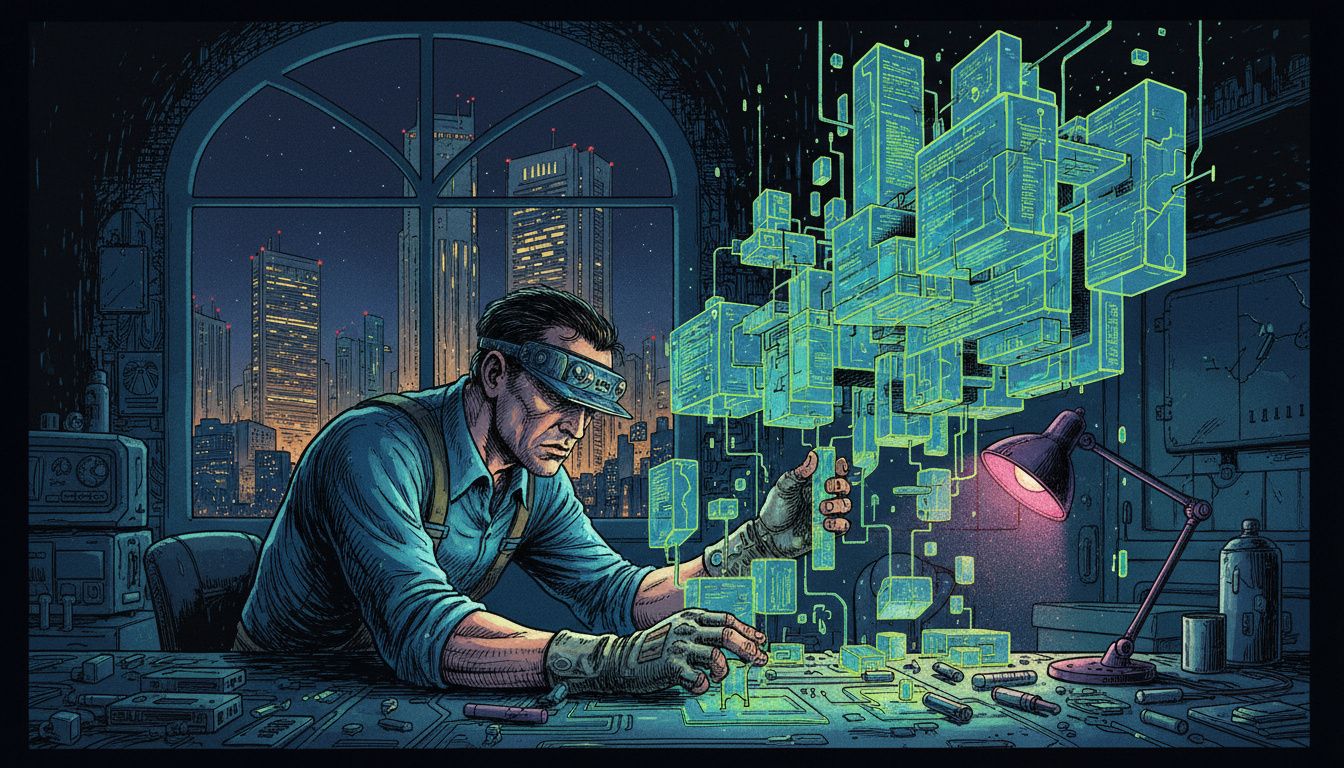
Your business no longer needs a website. It needs a system.
When your company outgrows the digital brochure stage, generic tools become a burden. I'll show you the three real ways to build a web presence and why Django is the strategic decision to scale without relying on plugins or hidden limitations.
Comments 0
Be the first to comment.